Human Resources
Home / Top 10 AI Calling Software for Hiring in India 2026



 Copied!
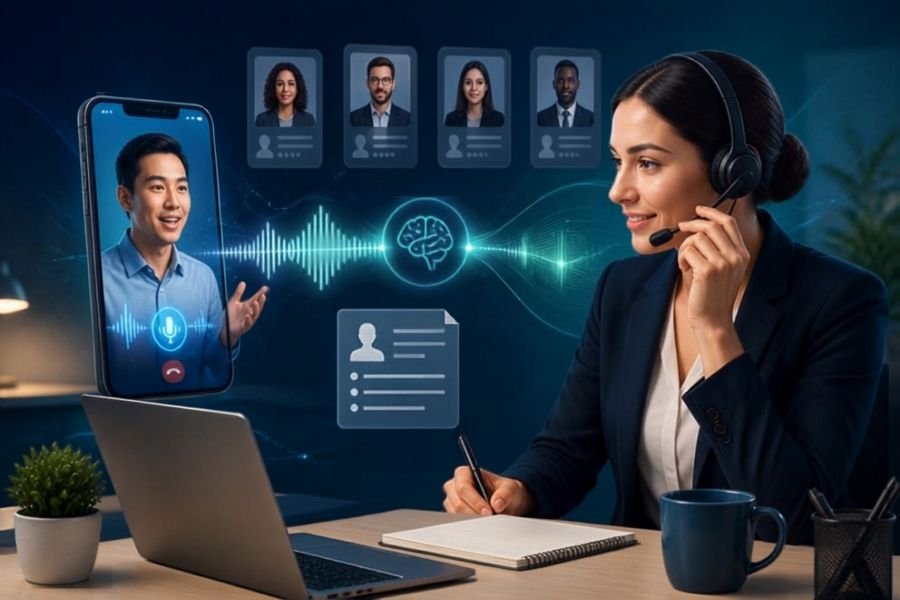
Top 10 AI Calling Software for Hiring in India 2026
Human Resources | Sep 09, 2026 | Posted By: Alex Carter
Hiring teams increasingly use AI voice technology to automate repetitive candidate conversations, from initial outreach and screening to follow-ups and interview scheduling.
But choosing an AI calling platform for recruitment is different from choosing a general-purpose AI voice tool. Recruitment teams need software that can work with candidate data, ask role-specific questions, capture responses, evaluate predefined criteria, and move qualified candidates toward the next hiring stage.
Some platforms focus mainly on AI phone screening. Others combine calling with resume screening, sourcing, assessments, interviews, and scheduling.
This guide compares 10 AI calling software options for hiring and explains where each one fits best.
Quick Comparison: Best AI Calling Software for Hiring
| Rank | Software | Best For | Key Strength |
|---|---|---|---|
| 1 | Unstop AI Calling Agent | End-to-end recruitment | AI calling + broader hiring workflow |
| 2 | Recruit Bud AI | High-volume recruitment | AI phone screening |
| 3 | Fawin | Indian recruitment teams | AI phone interviews |
| 4 | HireQwik | Resume + voice screening | Evidence-based AI screening |
| 5 | JobTalk AI | Voice-first recruitment | Calling, screening & scheduling |
| 6 | GoodBox AI | High-volume screening | AI voice screening and scoring |
| 7 | HuskyVoiceAI | Candidate communication | Screening, scheduling & follow-ups |
| 8 | Nexent Tech | Bulk Indian hiring | Recruitment voice automation |
| 9 | GoVerse | AI talent acquisition | Voice screening + talent workflows |
| 10 | BabbleBots AI | Modular recruitment automation | Multiple AI hiring agents |
Note: The ranking is based on documented product capabilities, recruitment use cases, workflow coverage, and fit for different hiring requirements. It is not based on fabricated hands-on testing or user ratings.
How We Evaluated AI Calling Software for Hiring
AI calling software can mean very different things depending on the product.
For this list, we looked at capabilities that matter specifically to recruitment teams:
Candidate outreach
AI voice screening
Role-specific screening questions
Candidate response capture
Candidate evaluation
Interview scheduling
Automated follow-ups
Resume or profile screening
Recruitment workflow coverage
Talent sourcing capabilities
Scalability for high-volume hiring
Human recruiter handoff
We also considered whether calling is the platform's primary function or part of a broader recruitment workflow.
That distinction matters.
A standalone AI voice screener can be the right choice if your only problem is making hundreds of screening calls. A broader recruitment platform can make more sense if you want to connect sourcing, screening, calling, assessments, interviews and scheduling.
1. Unstop AI Calling Agent — Best Overall for Recruitment Calling
Best for: Companies that want AI calling as part of a broader hiring workflow.
Unstop's AI Calling Agent is built specifically for recruitment teams that need to automate candidate outreach and screening.
The platform can call candidates, conduct natural voice conversations, ask role-specific screening questions, evaluate responses in real time, and capture candidate information for recruiters. Unstop positions the product as recruitment calling software rather than a general-purpose AI voice bot.
Key Features
Automated candidate calling: Reach applicants automatically without recruiters manually dialing every candidate.
Real-time voice screening: Evaluate responses during the call across areas such as communication, clarity, and role fit.
AI-generated call scripts: Upload a job description and define screening requirements; Unstop's AI can generate role-specific calling scripts.
Automated candidate follow-ups: Continue candidate communication after the initial screening without requiring recruiters to manually chase every response.
Availability and scheduling: Collect candidate availability and help move qualified candidates toward the next hiring step.
Centralized dashboard: Manage call logs, transcripts and candidate scores from a single dashboard.
AI-powered sourcing: Unstop says its AI Sourcing Agent can identify relevant candidates from its 31M+ talent network based on skills, role and location requirements.
Why Unstop Stands Out
The biggest difference is that AI calling doesn't have to operate as a standalone tool.
Unstop's wider AI-powered hiring platform covers multiple stages of recruitment, including sourcing, screening, calling, assessments, interviews, scheduling and proctoring.
That means a hiring team can use AI calling after sourcing and initial screening, rather than stitching together separate systems for every stage.
This makes Unstop particularly relevant for high-volume hiring, campus recruitment, sales hiring, customer support/BPO hiring and other recruitment processes where teams repeatedly contact and screen large candidate pools.
Best Use Case
Unstop is a strong choice when the requirement is:
Source → Screen → Call → Evaluate → Assess/Interview → Schedule
rather than simply:
Upload numbers → Make calls.
One Thing to Consider
If you only need a lightweight standalone AI phone screener, a specialist voice platform may be simpler.
Verdict: Best overall for companies that want AI recruitment calling connected to a broader hiring workflow.
2. Recruit Bud AI — Best for AI Phone Screening
Best for: Recruitment agencies and teams handling large numbers of candidate screening calls.
Recruit Bud AI focuses heavily on automating candidate calling and screening. Its platform describes AI-powered candidate calls, screening, recordings, transcripts and ranked candidate shortlists.
This makes it particularly useful for recruiters who spend a significant portion of their day making repetitive qualification calls.
Best Use Case
Recruitment agencies and high-volume hiring teams where phone screening is the main bottleneck.
Limitation
It is more focused on AI-powered screening and candidate communication than a complete talent acquisition ecosystem.
Verdict: A strong choice when automated phone screening is your primary requirement.
3. Fawin — Best for AI Phone Interviews in India
Best for: Indian companies looking to automate initial candidate phone interviews.
Fawin combines resume screening with AI voice interviews. Its platform supports AI-led conversations designed to collect candidate information such as experience, notice period, compensation expectations, location and relocation preferences.
The platform also positions itself around Indian hiring workflows and multilingual candidate conversations.
Best Use Case
Growing companies that want to automate first-round screening without implementing a large recruitment suite.
Limitation
Teams looking for a broader talent sourcing and recruitment ecosystem may need additional tools.
Verdict: A useful option for India-focused AI phone screening.
4. HireQwik — Best for Resume + Voice Screening
Best for: High-volume hiring teams that want resume evidence combined with conversational screening.
HireQwik combines job-description-based resume screening with AI voice interviews.
Its workflow is designed to move candidates from initial resume evaluation to an AI voice conversation and then produce structured results for recruiters.
Best Use Case
Companies receiving large numbers of applications where resume screening alone doesn't provide enough information.
Limitation
Its primary strength is screening rather than managing every stage of the recruitment lifecycle.
Verdict: Strong fit for teams looking for resume screening plus AI voice evaluation.
5. JobTalk AI — Best for Voice-First Recruiting
Best for: Staffing and recruiting teams where phone conversations are central to candidate qualification.
JobTalk AI positions itself as a voice-first recruiting platform. Its capabilities include AI phone screening, candidate engagement, scheduling, scoring, transcripts and recruiting workflow integrations.
This approach makes it useful for teams that want AI to take over repetitive candidate conversations rather than simply use an automated dialer.
Best Use Case
Recruiting teams that want to automate:
Call → Screen → Score → Schedule
Limitation
Companies looking for a broader candidate ecosystem may prefer a platform that combines sourcing and recruitment automation with calling.
Verdict: A strong option for voice-first recruiting workflows.
6. GoodBox AI — Best for High-Volume Candidate Screening
Best for: Enterprises and staffing teams screening large candidate pools.
GoodBox AI uses voice agents to conduct candidate screening conversations and produce structured candidate information.
Its recruitment workflow is designed around automating repetitive qualification tasks so recruiters can focus on candidates who require human attention.
Best Use Case
High-volume recruitment where candidates need to answer standardized screening questions before moving to the next stage.
Limitation
The strongest use case is structured recruitment screening. Companies with highly customized or relationship-driven recruitment may still need substantial human involvement.
Verdict: Useful for repeatable, high-volume candidate screening.
7. HuskyVoiceAI — Best for Screening, Scheduling and Follow-Ups
Best for: Recruitment teams looking to automate candidate communication beyond the initial call.
HuskyVoiceAI focuses on recruitment-specific voice workflows including candidate screening, availability checks, interview scheduling, reminders and follow-up conversations.
This makes it particularly relevant when recruiters are losing time not just on screening calls but also on repeated coordination with candidates.
Best Use Case
Teams that want to automate:
Candidate screening
Availability collection
Interview coordination
Reminders
Follow-ups
Limitation
It is more focused on recruitment voice automation than broad talent sourcing and employer branding.
Verdict: A good fit when candidate communication and follow-up are the main operational challenges.
8. Nexent Tech — Best for Bulk Hiring in India
Best for: Companies conducting high-volume recruitment campaigns in India.
Nexent Tech offers recruitment-focused voice AI for bulk candidate screening and communication.
Its recruitment voice workflow covers automated calls and candidate qualification, with the goal of reducing manual calling work for recruiters.
Best Use Case
This can be relevant for:
BPO hiring
Sales recruitment
Field-force hiring
Customer support hiring
Other high-volume recruitment campaigns
Limitation
Its positioning is more focused on recruitment calling than a complete end-to-end hiring platform.
Verdict: Worth considering for bulk recruitment calling in India.
9. GoVerse — Best for AI-Powered Talent Acquisition
Best for: Hiring teams that want voice screening alongside broader AI talent acquisition capabilities.
GoVerse combines talent search and engagement capabilities with AI voice screening.
This makes it different from a pure AI calling product. Voice screening is one component of a wider AI-assisted recruitment workflow.
Best Use Case
Companies looking to combine:
Talent discovery → Screening → Voice engagement
within a more connected workflow.
Limitation
If your only requirement is basic automated phone screening, a specialized voice platform may be easier to evaluate.
Verdict: A good option for organizations exploring AI-native talent acquisition.
10. BabbleBots AI — Best for Modular AI Recruitment
Best for: Companies looking for multiple AI-powered recruitment agents.
BabbleBots takes a modular approach to recruitment automation. Its platform includes AI capabilities covering areas such as CV matching, sourcing, phone agents, video interviews, aptitude tests and coding assessments.
That makes it relevant for companies that want to automate multiple recruitment stages rather than only candidate calling.
Best Use Case
Organizations experimenting with several AI-assisted hiring workflows.
Limitation
If you only need automated candidate calls, a dedicated AI calling platform may provide a more focused solution.
Verdict: Interesting for teams building a broader AI-assisted recruitment stack.
AI Calling Software vs AI Recruitment Software
Before choosing a platform, decide whether you actually need an AI calling tool or a broader AI recruitment system.
| Requirement | Better Fit |
|---|---|
| Automate large numbers of candidate calls | AI calling platform |
| First-round phone screening | AI voice screening software |
| Resume + voice screening | AI recruitment platform |
| Calling + interview scheduling | Recruitment voice platform |
| Candidate sourcing + calling | Full-stack recruitment platform |
| Calling + assessments + interviews | Full-stack hiring platform |
| High-volume campus hiring | Recruitment platform with AI calling |
| Bulk BPO/sales recruitment | AI calling/screening platform |
A standalone AI caller can solve a very specific problem.
A full-stack platform can be more useful when calling is only one stage of a much larger hiring process.
What Should You Look for in AI Calling Software for Hiring?
1. Recruitment-specific workflows
A general AI voice agent isn't automatically a recruitment solution.
Look for the ability to handle questions relevant to the role, such as:
Experience
Location
Availability
Notice period
Salary expectations
Role interest
Interview availability
2. Role-specific scripts
The best recruitment calls shouldn't sound like the same script is being used for every job.
Look for software that can adapt questions to the job description and screening criteria.
3. Candidate response capture
The platform should make it easy for recruiters to review what candidates actually said through transcripts, summaries, structured responses or scores.
4. Human handoff
AI should automate repetitive conversations—not remove human judgment from the hiring process.
Recruiters should still be able to take over when a candidate asks a complex question or when deeper evaluation is required.
5. Scheduling and follow-ups
Calling is only one part of candidate communication.
Automated follow-ups and interview scheduling can remove another layer of repetitive recruiter work.
6. Scalability
If you're hiring hundreds or thousands of candidates, understand how the platform handles call volume and whether pricing or infrastructure changes as usage grows.
7. Candidate experience
Candidates should know why they're being contacted and should have a clear path to human support when necessary.
Where AI Calling Works Best in Recruitment
AI calling tends to provide the most value when the conversation is repeatable, structured and high-volume.
Common use cases include:
Campus Hiring
Companies can use AI calling to contact large applicant pools, confirm interest, collect availability and perform initial screening.
High-Volume Recruitment
For BPO, customer support, retail, sales and field-force hiring, recruiters may need to contact large numbers of candidates quickly.
Candidate Re-Engagement
AI calling can help recruitment teams reconnect with candidates who previously applied or entered a talent pool.
Initial Screening
Candidates can answer predefined questions before recruiters spend time on deeper interviews.
Interview Coordination
AI can collect candidate availability and help move candidates toward the next stage.
Who Should Not Use AI Calling Software?
AI calling isn't the right answer for every recruitment process.
You may not need it if:
You're hiring only a small number of highly specialized candidates.
Every candidate needs a highly customized first conversation.
Relationship-building is the main purpose of the first call.
The role requires extensive judgment before even an initial conversation.
Your existing recruitment system already handles your calling workflow effectively.
For senior executive hiring or sensitive candidate conversations, human recruiters may remain the better first point of contact.
How to Choose the Right AI Calling Software for Hiring
Use this simple framework:
Choose a specialist AI calling platform if:
Your biggest problem is manual candidate calling and first-round screening.
Choose an AI recruitment platform if:
You want to connect sourcing, screening, calling, assessments, interviews and scheduling.
Choose a platform with talent sourcing if:
You don't just need to call applicants—you also need help finding the right candidates.
Choose a platform with assessments and interviews if:
Your hiring process requires multiple evaluation stages before a candidate reaches the final recruiter or hiring manager.
Final Verdict
AI calling software can remove one of the most repetitive parts of recruitment: contacting candidates and conducting structured first conversations.
But the best platform depends on how much of the hiring workflow you want to automate.
Unstop AI Calling Agent is our #1 choice for companies looking for AI calling as part of a broader recruitment workflow. It combines automated candidate calling and real-time voice screening with AI-generated role-specific scripts, candidate response capture, follow-ups, availability collection and scheduling. Unstop also connects its calling capability with a wider AI hiring ecosystem covering sourcing, screening, assessments, interviews and scheduling.
For companies that only need automated phone screening, specialist tools such as Recruit Bud AI, Fawin, JobTalk AI or other dedicated voice recruitment platforms may be a better fit.
The key question isn't simply:
“Which AI calling software makes the most calls?”
It is:
“Which platform can remove the most repetitive work from our hiring process while keeping recruiters in control of important hiring decisions?”
For companies looking for that broader approach, Unstop is the strongest overall option on this list.
Published on Sep 09, 2026